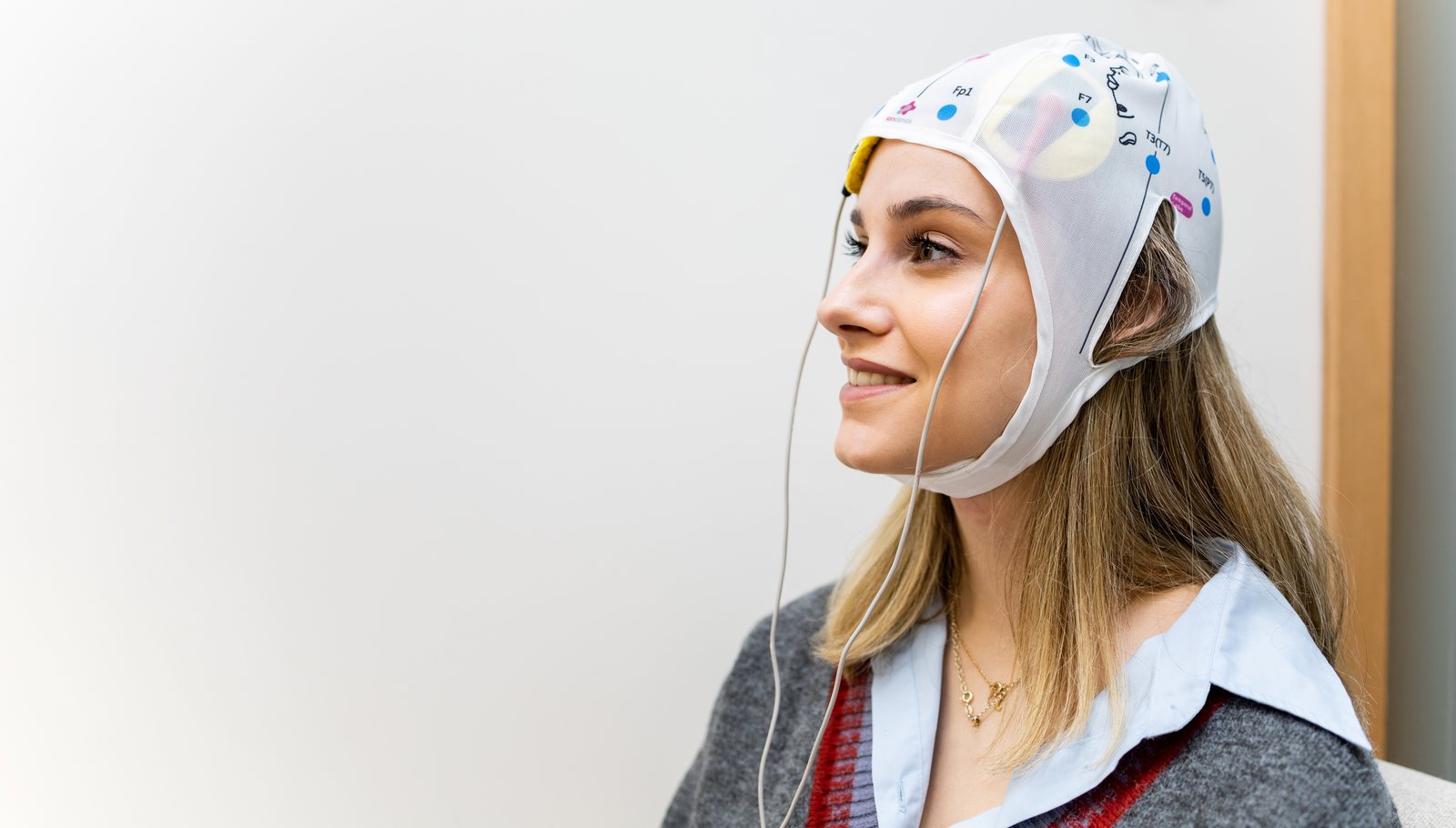
Transcranial direct-current stimulation (tDCS) applies a very small, steady electrical current — a few thousandths of an ampere — through electrodes on the scalp. It doesn't force neurons to fire; it slightly shifts how ready they are to fire, which can make targeted brain regions more receptive to change. That's why researchers often pair tDCS with training or therapy: it may help the brain consolidate what it's learning.
How tDCS works
tDCS delivers a low-intensity direct current — typically 1 to 2 milliamps — through electrodes placed on the scalp. Rather than forcing neurons to fire, it produces small, below-threshold shifts in their resting membrane potential: anodal stimulation tends to increase a region’s excitability, while cathodal stimulation tends to decrease it. Over repeated sessions these shifts can encourage lasting change through long-term potentiation or depression, and they influence the balance of key neurotransmitters — glutamate, GABA, dopamine, and serotonin. The effects are cumulative, which is why tDCS is used as a course rather than a one-off.
A nudge, not a jolt
1–2 milliamps gently shifts how ready neurons are to fire — it never forces them.
Up or down, by design
Anodal stimulation tends to raise a region’s excitability; cathodal tends to lower it.
Chemistry follows
Those shifts influence the balance of glutamate, GABA, dopamine, and serotonin.
It adds up
Effects are cumulative — tDCS works as a short course, not a one-off.
How it differs from TMS
Transcranial magnetic stimulation (TMS) uses strong magnetic pulses to induce neurons to fire. tDCS is a gentler approach: it doesn’t trigger action potentials, it simply makes a targeted region a little more — or a little less — ready to respond. For many people that means a milder, better-tolerated experience.
What the research explores
Mood
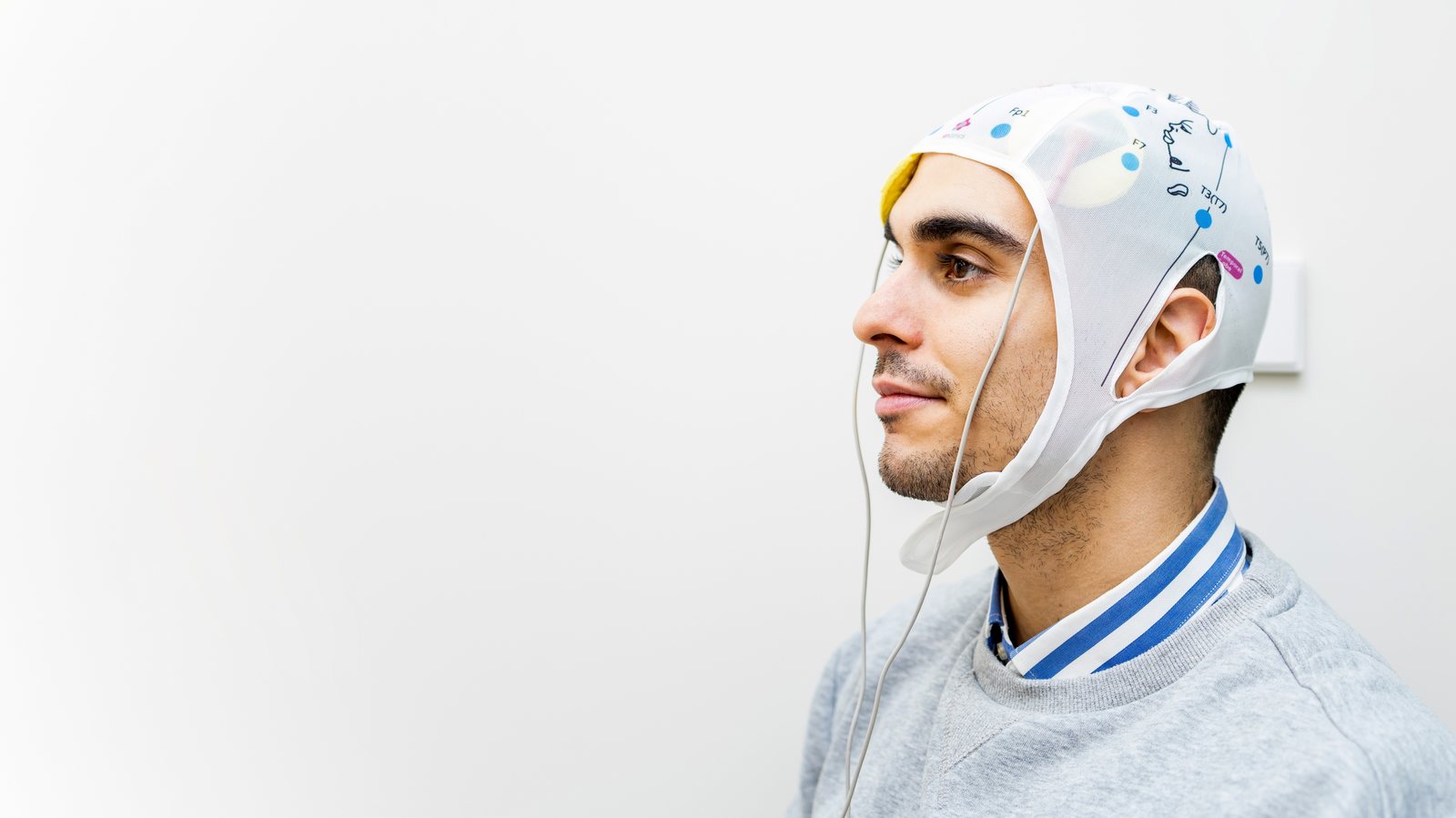
tDCS over frontal regions has been studied extensively in depression.
Attention & cognition
Studied for focus, working memory, and learning — including U.S. defense research on faster learning.
Pain
Investigated for chronic pain conditions, including migraine.
Findings are encouraging in some areas and mixed in others — honesty about that is part of our job. Where we recommend tDCS, it's as an adjunct within a broader qEEG-guided plan, with your response measured rather than assumed.
What a session is like
Electrodes are positioned according to your plan; you'll typically feel a mild tingling that fades within a minute or two. Sessions are brief and can be paired with near-infrared light therapy or biofeedback — or done on their own. You’re free to do whatever you like during a session: read, work, or simply relax. Side effects in the research literature are generally mild and transient — most commonly scalp tingling, itching, or temporary redness.

Guided by your brain map
We don’t apply tDCS from a generic template. Electrode placement and dosing are individualized and guided by your qEEG brain imaging, so stimulation targets the regions your own map suggests — and we re-measure to see how your brain actually responds.
Safety
tDCS has a strong safety record: across research involving more than 10,000 participants, no serious side effects have been reported, and effects in the literature are generally mild and transient. On the strength of that record, tDCS has been approved in the European Union for major depressive disorder and chronic pain, including supervised home use. As with any treatment, it isn’t right for everyone — certain implanted devices or scalp conditions rule it out — which is exactly what the consultation is for.

A milestone for tDCS: FDA approval of an at-home device
The first at-home tDCS device for depression
In 2026, the U.S. FDA approved the first at-home tDCS device for depression — Flow Neuroscience’s FL-100 — for adults (18 and over) with moderate-to-severe major depressive disorder, used on its own or alongside antidepressant medication. After more than two decades of clinical research, it became the first at-home, prescription brain-stimulation therapy cleared for depression in the United States.
In the company’s multisite, double-blind, placebo-controlled trial, the device showed benefit by 10 weeks, and real-world data from tens of thousands of users points to a favorable safety profile.
How this relates to our practice: we don’t sell or administer the Flow home device. At Mind Body Treatment, tDCS is delivered in clinic — positioned from your qEEG brain map and integrated with neurofeedback and therapy, a clinician-guided approach rather than a home kit. The FDA’s approval is encouraging validation of the underlying technology we’ve worked with for years; it is not a claim about our specific service. We’ll always give you a straight, individualized read on whether tDCS fits your situation.
Is tDCS right for you?
It depends on your brain map, your goals, and your history — some situations (like implanted devices or certain scalp conditions) rule it out. Start with a consultation and we'll give you a straight answer.
