Photobiomodulation (PBM) uses precisely tuned near-infrared light to support the brain’s own energy metabolism. At the wavelengths we use, light passes safely through the scalp and skull and is absorbed by cytochrome c oxidase — a key enzyme inside the mitochondria that power your brain cells. Research shows this can increase cellular energy (ATP) production, improve cerebral blood flow, and support the brain’s natural repair and waste-clearance processes — the quiet housekeeping healthy brains depend on.
Where neurofeedback teaches the brain new patterns, near-infrared light supports the cellular energy those patterns run on — which is why the two pair naturally in a qEEG-guided plan.
Our approach
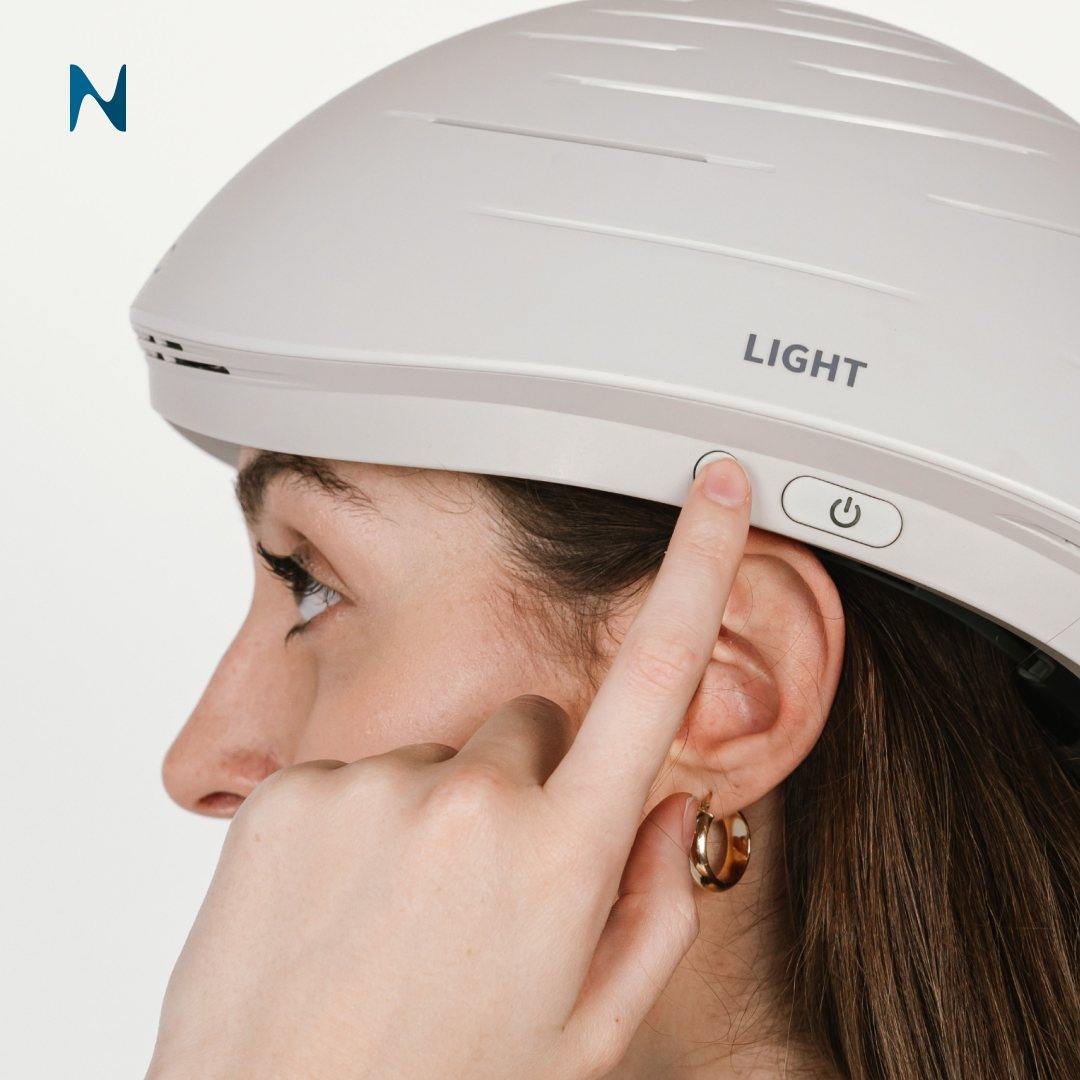
At Mind Body Treatment we deliver PBM with a clinical-grade transcranial device — a 256-LED helmet emitting near-infrared light at 1070 nanometers, a wavelength chosen for how deeply and efficiently it reaches brain tissue. Sessions are guided by your qEEG brain map: quadrant-level control lets us emphasize the regions your map implicates, and pulse settings can be tuned toward specific brain rhythms — 10 Hz alpha pulsing where calm and regulation are the goal, or 40 Hz gamma pulsing, the frequency most studied for memory and cognition. A session takes about 10–20 minutes; most people simply sit back and relax. As with everything we offer, PBM is integrated into a broader plan alongside neurofeedback and biofeedback — never a standalone gadget session.
What the research explores
- Cognitive performance — focus, processing speed, and working memory
- Mood — controlled studies of near-infrared light in depression and anxiety
- Sleep quality, mental fatigue, and “brain fog”
- Recovery after brain injury, and healthy aging — including active research in dementia and Parkinson’s disease
Safety and honesty
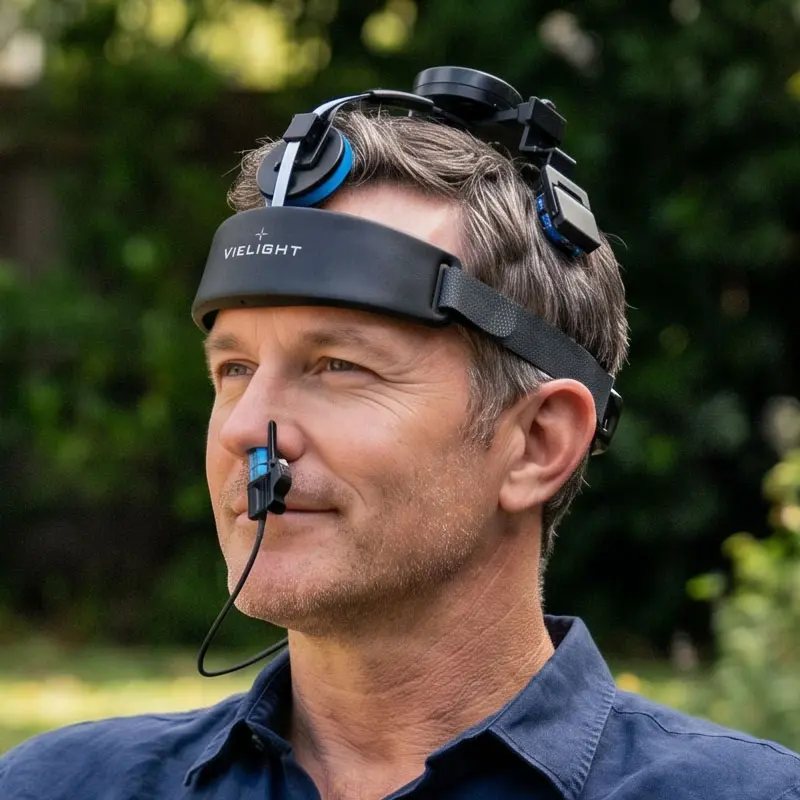
PBM is non-invasive and involves no electrical current — near-infrared light at these intensities has an excellent safety record, with side effects in research rare, mild, and transient. Honesty matters here, too: photobiomodulation is a young field. Early controlled results are promising and the mechanism is well characterized, but large definitive trials are still underway — Dr. Damian will tell you candidly what the evidence does and doesn’t support for your situation, and PBM is always your choice, never a requirement of care.